
Summary
- Top Bland AI alternatives in 2026 include Phonely, Retell AI, Synthflow, Vapi, Twilio Voice, Lindy, and Replicant. Phonely leads with competitive pricing, unified voice, SMS, and chat from one platform, no-code setup, and compliance across SOC 2, HIPAA, CCPA, and PCI.
- Bland AI's billing is more complex than the headline rate suggests. Connected minutes cost $0.11 to $0.14/min, with separate charges for transfers and a $0.015 minimum on every outbound attempt, including failed calls.
- The right alternative depends on your team's technical resources. Phonely and Synthflow work without developers. Retell AI and Vapi give technical teams more control. Twilio Voice provides raw infrastructure for teams that want to build from scratch.
- Channel fragmentation is a growing problem. Bland offers Voice, SMS, and Chat as separate products. Platforms like Phonely that run every channel from one dashboard reduce operational complexity as teams scale.
- Post-call analytics separates good platforms from great ones. AI summaries, sentiment analysis, and custom reporting turn every conversation into data that improves the next one.
Bland AI quickly became one of the most recognized platforms for programmable voice agents. But as teams scale past a few hundred calls, patterns start to emerge: billing that's hard to predict, setup that leans heavily on engineering, and channels that don't quite work as one.
This guide compares seven alternatives across billing, setup complexity, channel coverage, and compliance to help you find the right fit for your team.
Why are teams moving away from Bland AI?
Most teams don't leave over a single issue. It's usually a combination of cost, complexity, and channel limitations that compounds as call volume grows.
1. Unpredictable billing adds up fast
Connected minutes cost $0.11 to $0.14/min depending on your plan, with separate charges for transfers ($0.03 to $0.05/min) and a $0.015 minimum per outbound attempt, even on failed calls. For teams running warm transfers or high-volume outbound, the gap between the headline rate and the actual invoice adds up quickly.
2. Setup still leans heavily on technical teams
Bland offers visual tools like Pathways and Norm, but production workflows still require webhook configuration, custom API calls, and developer involvement. Bland's own website notes that production-grade deployment typically takes around 30 days with a dedicated solutions engineer.
3. Multiple channels, but not a unified experience
Bland offers Voice, SMS, and Chat, but each channel is billed and configured independently. According to McKinsey's 2024 B2B Pulse Survey, B2B customers now use an average of 10 interaction channels, up from five in 2016. Fragmented channel support creates siloed data and disjointed workflows as teams scale.
Comparing Bland AI alternatives in a nutshell
8 best Bland AI alternatives in 2026
1. Phonely
Phonely is the ideal alternative to Bland AI as it is built to solve the three problems that push teams away from Bland: unpredictable billing, engineering-dependent setup, and fragmented channels.
The platform handles voice, SMS, chat, and API from a single dashboard with analytics across every channel.

After each call, Phonely generates detailed analytics and insights, giving teams visibility into what's actually happening in their customer conversations.
Setup doesn't require a developer. You can upload a knowledge base or connect your website, choose from 1,000+ voices across 100+ languages, and deploy a working agent in minutes. Phonely reports that 70% of businesses get started in under 5 minutes. For enterprise teams with more complex workflows, a dedicated team handles configuration, CRM integration, and ongoing optimization.
What makes Phonely different from Bland AI?
Where Bland's channels are billed and configured as separate products, Phonely runs voice, SMS, and chat through one platform with analytics across every channel.
Prebuilt integrations connect to CRMs, calendars, and scheduling tools for real-time actions during calls, not just post-call data pushes. The platform also supports browser-based automations for connecting software that doesn't have an API.
On the compliance side, Phonely is SOC 2, HIPAA, CCPA, and PCI compliant, with automatic PII redaction built in.
What happens after every call?
This is where most voice platforms stop, and Phonely keeps going. Every call generates a transcript, an AI summary, and sentiment analysis. Teams can build custom reports directly in the platform or pipe data into their existing monitoring tools.
That feedback loop matters. It turns every conversation into data that helps the next one go better.
- Best for: Teams that want voice, SMS, and chat from one platform with built-in analytics and no engineering dependency.
- Pricing: First 100 minutes free. Usage-based pricing that scales with volume. Plans range from Starter (up to 50 calls/month) through Enterprise with custom integrations and SIP trunking.

2. Retell AI
Retell AI breaks voice agent costs into separate components: voice engine, LLM, and telephony. The base rate starts at $0.07+/min, though total costs vary based on your model, voice, and telephony choices. When a call transfers to a human, the AI fee stops. The platform includes simulation testing, a drag-and-drop agent builder, and post-call analysis. Compliance covers HIPAA and SOC 2 Type II.
- Best for: Technical teams that want granular control over every cost component.
- Where it falls short: Multi-layered billing requires careful tracking. Non-technical teams may find it complex.
- Pricing: $0.07+/min base. $10 free credits. Enterprise plans available on request.

3. Synthflow
Synthflow is a no-code voice AI platform with in-house telephony, claiming sub-100ms latency and 99.99% uptime.
The visual Flow Designer lets teams build agents without code. An AI Sandbox lets teams preview and test changes before going live. The platform supports voice, chat, and SMS with 200+ integrations, including HubSpot, Salesforce, and GoHighLevel. Compliance covers SOC 2, HIPAA, PCI DSS, and ISO 27001.
- Best for: Agencies and BPOs that need white-label branding and reseller tooling across multiple client programs.
- Where it falls short: Increasingly enterprise-focused. Smaller teams may find the current pricing less accessible.
- Pricing: Pay-as-you-go, $0 to start. 5 concurrent calls included, $20 per additional call. Enterprise on request.

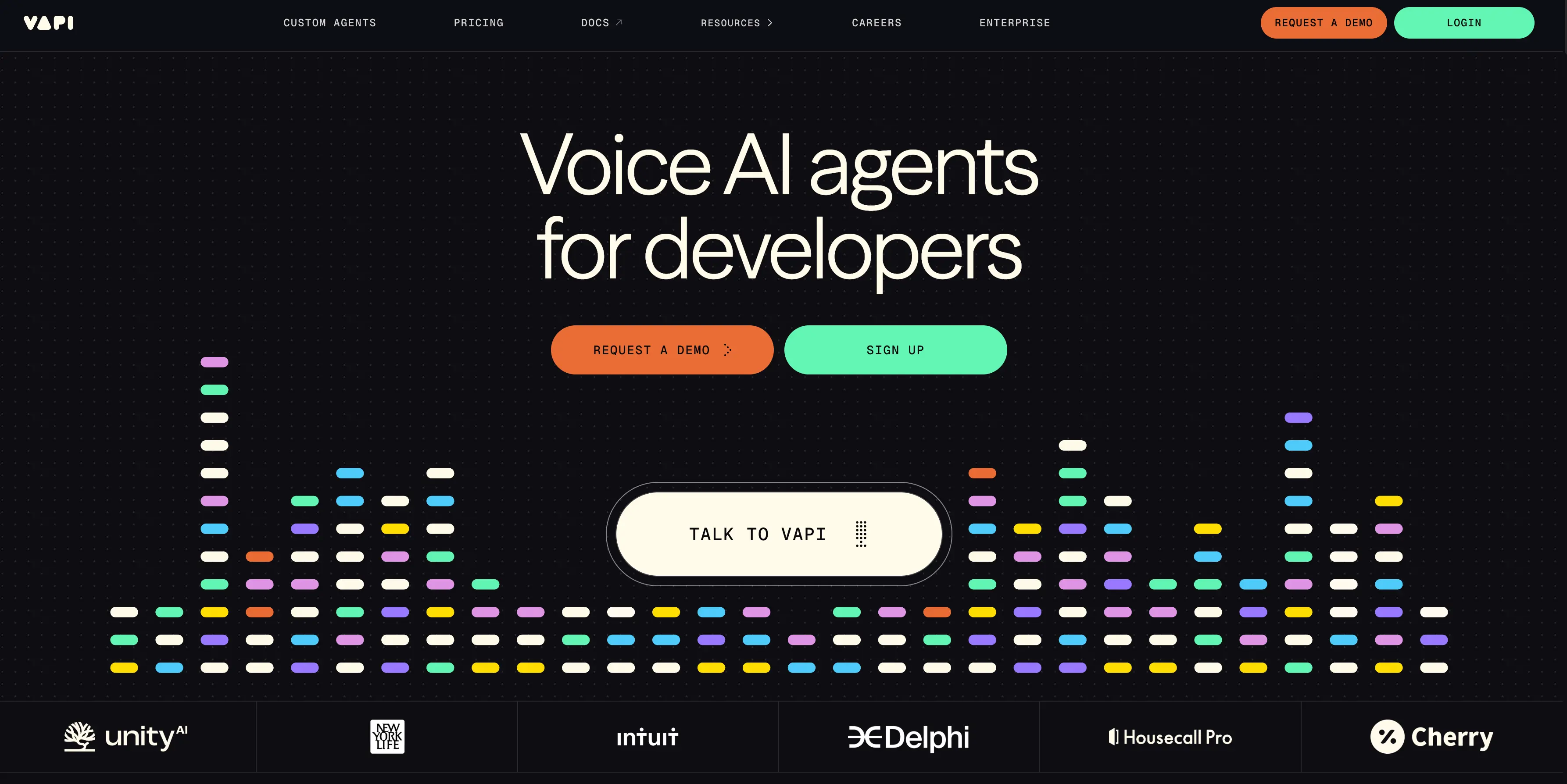
4. Vapi
Vapi is an API-native platform that lets developers bring their own speech, language, and voice models. You choose your STT, LLM, and TTS providers, and Vapi handles the orchestration with a usage-based platform fee, with provider costs billed separately.
The platform supports 100+ languages, automated testing to catch hallucination risks before production, and A/B experiments to optimize prompts, voices, and flows. Over 500K developers have built on the platform.
Compliance includes SOC 2, HIPAA, and PCI at the enterprise tier.
- Best for: Engineering teams that want full control over every component in their voice AI stack.
- Where it falls short: Total costs add up across 4 to 5 separate providers, making monthly spend hard to predict. HIPAA compliance is only available at the enterprise tier.
- Pricing: Usage-based platform fee plus separate provider costs for STT, LLM, TTS, and telephony. Free credits to start.
5. Twilio Voice
Twilio Voice is a programmable telephony API that provides calling infrastructure: IVR, call routing, recording, and SIP trunking. Several voice AI platforms on this list offer Twilio as a telephony integration, which speaks to the reliability of its network.
The platform covers 100+ countries with SDKs in six languages and supports embedded calling across iOS, Android, and web. Twilio is PCI DSS Level 1 compliant and built for industries including healthcare and financial services.
- Best for: Technical teams that want to own their entire voice stack from the telephony layer up.
- Where it falls short: Twilio offers tools like Studio (visual IVR builder) and Voice Intelligence (transcription and signal extraction), but building a full AI voice agent still requires significant development work on top of the core API.
- Pricing: Pay-as-you-go with no contracts.

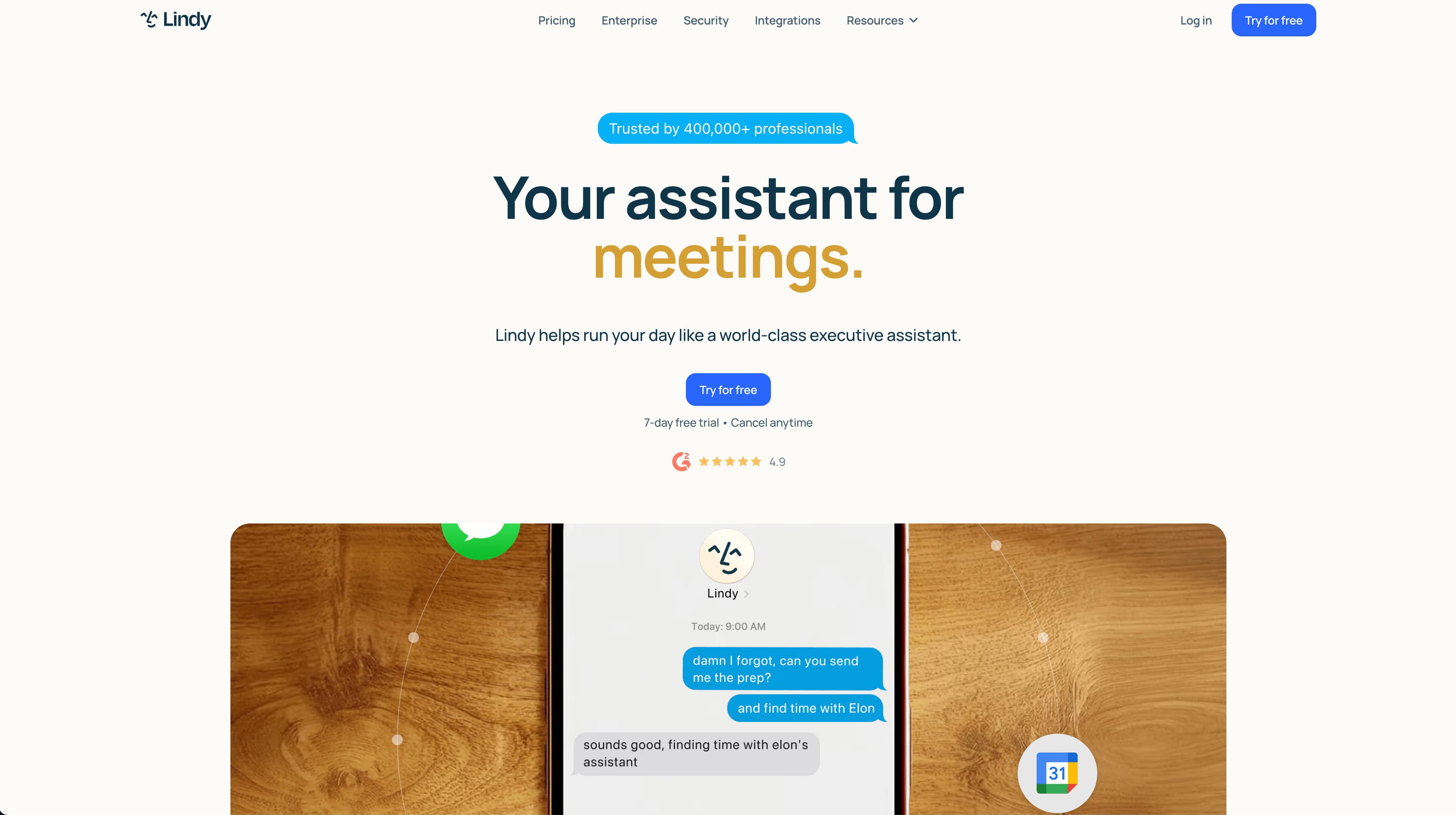
6. Lindy
Lindy is an AI work assistant that handles inbox management, meeting prep, and calendar automation, with voice calling as one of several capabilities. It's not a dedicated voice AI platform, but teams that need calling combined with broader workflow automation like email follow-ups, CRM updates, and scheduling can run both from one place.
The platform connects to hundreds of apps. Compliance covers HIPAA, SOC 2, and PIPEDA.
- Best for: Teams that want a general AI assistant with calling as one part of a broader automation stack.
- Where it falls short: Voice is not the core product. Teams with complex calling workflows or high call volumes will likely need a dedicated voice AI platform.
- Pricing: Plans start at $49.99/mo. 7-day free trial.
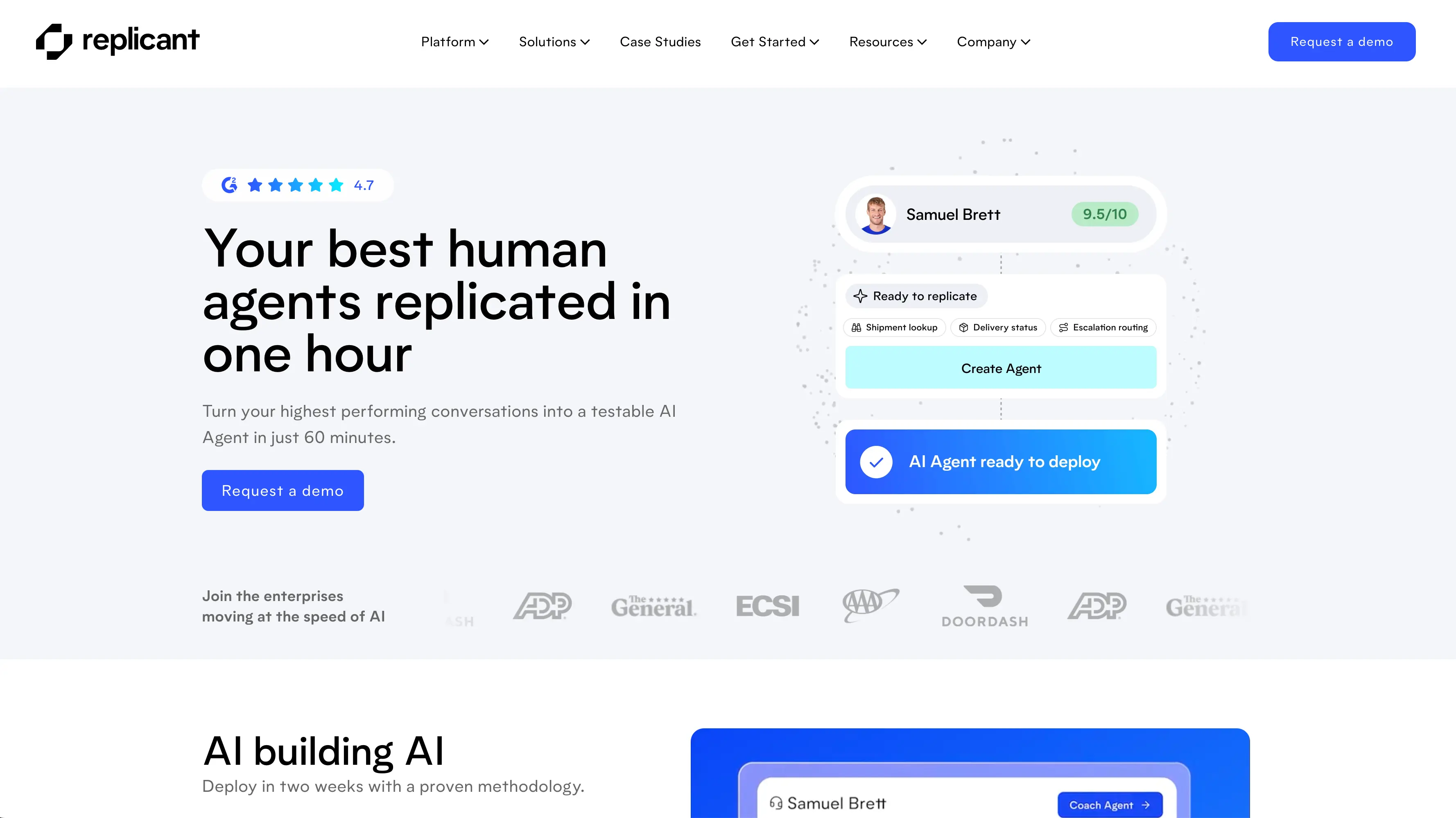
7. Replicant
Replicant is built specifically for enterprise contact centers. The platform analyzes your existing human conversations, then builds AI agents modeled after your top performers. It claims you can have a testable AI agent within 60 minutes and deploy to production in weeks.
The architecture combines LLMs with deterministic, code-based guardrails to keep agents on-script and prevent hallucinations. Channels cover voice, chat, and SMS. The platform includes automatic PII redaction, A/B testing, and a conversation intelligence layer for insights across both AI and human agents.
Replicant has automated 1B+ agent minutes across hundreds of deployments and offers a money-back guarantee.
- Best for: Enterprise contact centers that want to automate tier-1 support with agents built from their own conversation data.
- Where it falls short: This is an enterprise product with enterprise sales cycles. No self-serve signup, no public pricing, and no free tier.
- Pricing: Contact sales. Money-back guarantee available.
How to set up Phonely as your Bland AI alternative
Phonely reports that 70% of businesses get started in under 5 minutes. Here's what the setup looks like:
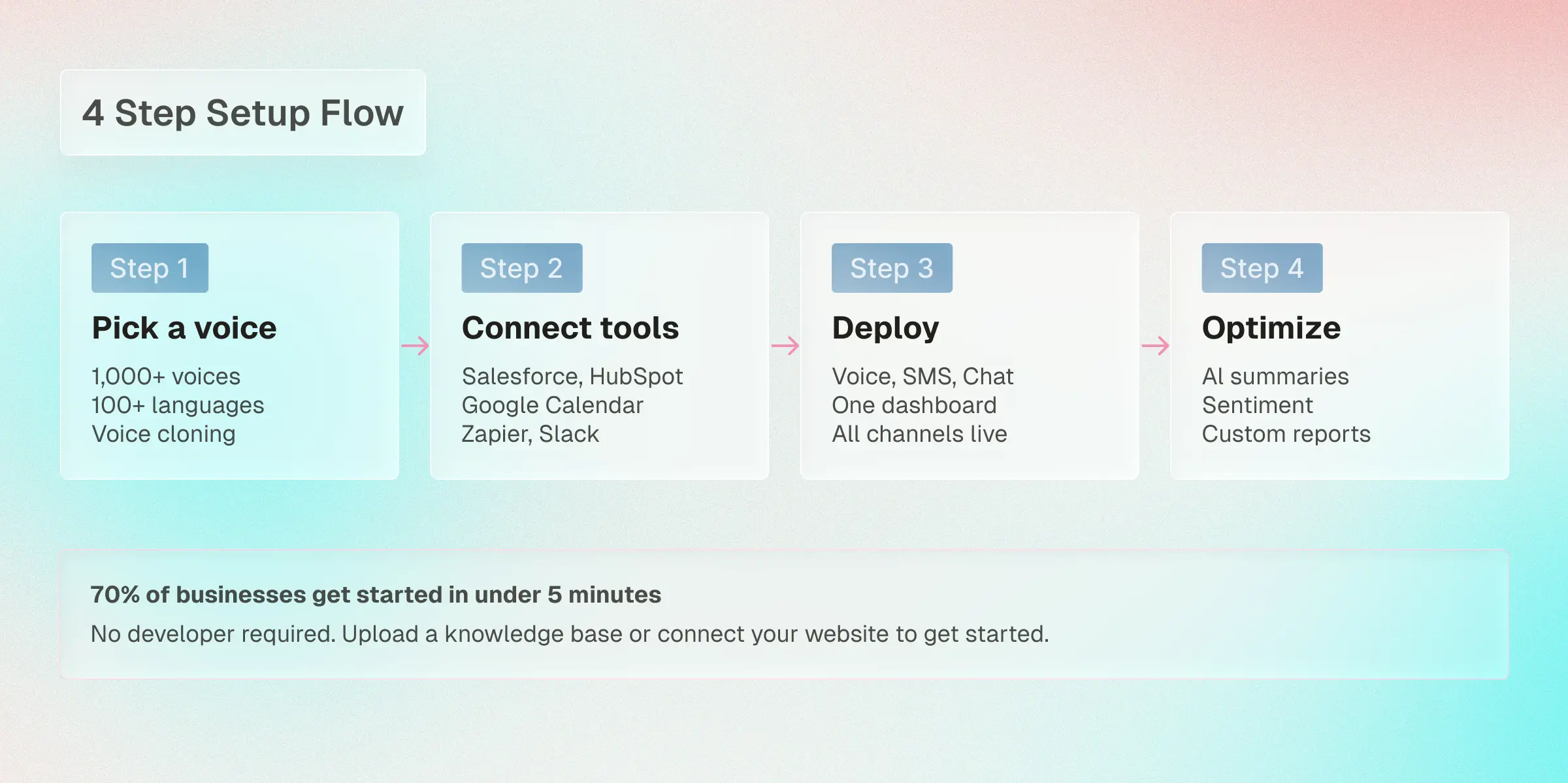
Step 1: Pick a voice and train your agent
Choose from 1,000+ voices across 100+ languages and accents, or clone your own voice directly from the platform. Then upload a knowledge base or connect your website to let Phonely learn everything about your business.
Step 2: Connect your CRM, calendar, and tools
Phonely integrates with tools like Salesforce, HubSpot, Google Calendar, Zapier, and Slack for real-time actions during calls. For software that doesn't have an API, the platform supports browser-based automations that connect to virtually anything.
Step 3: Deploy across voice, SMS, and chat
Go live across every channel from one dashboard. Phonely handles phone calls, SMS, chat, and API from a single platform, so you're not stitching together separate tools for each channel.
Step 4: Use AI analytics to optimize every conversation
After every call, Phonely generates an AI summary, sentiment analysis, and transcript. Build custom reports directly in the platform or pipe data into your existing monitoring tools. Each conversation feeds insights that help the next one go better.
Start with 100 free minutes and see how it works for your team. No developer required and no 30-day onboarding process. Start free or talk to sales.
Frequently asked questions
Can I switch from Bland AI without a developer?
Yes, depending on the platform. Phonely reports that 70% of businesses get started in under 5 minutes with no engineering support. Synthflow offers a no-code visual Flow Designer. Retell AI and Vapi are more developer-oriented, and Twilio Voice requires development resources to build on top of.
Which Bland AI alternatives are HIPAA compliant?
Based on what each platform publicly lists:
- Phonely: SOC 2, HIPAA, CCPA, PCI
- Retell AI: HIPAA, SOC 2 Type II
- Synthflow: SOC 2, HIPAA, PCI DSS, ISO 27001
- Vapi: SOC 2, HIPAA, PCI (enterprise tier)
- Twilio Voice: PCI DSS Level 1
- Replicant: Automatic PII redaction (contact sales for full compliance details)
Always confirm BAA availability directly with the vendor before signing.
Does Phonely offer free minutes?
Yes. Phonely offers 100 free minutes to get started. Plans start at the Starter tier for businesses handling up to 50 calls per month and scale through Enterprise with custom integrations and SIP trunking.